


Kashmiri Handicrafts vs Mass-Produced Imitations: Why It Matters
Kashmiri handicrafts are centuries-old art forms made by skilled artisans in the Kashmir Valley. Today, cheap machine-made copies flood markets and online stores, often sold under the same name. Knowing the difference protects your money, the craft, and the families who keep it alive.
What Is the Difference Between Authentic Kashmiri Handicrafts and Imitations?
Quick answer: Authentic Kashmiri handicrafts are handmade in Kashmir using traditional techniques and natural materials, often with GI certification. Imitations are machine-made elsewhere with synthetic materials, copying the look but not the quality, origin, or craftsmanship.
| Feature | Authentic Kashmiri Craft | Mass-Produced Imitation |
| Made by | Skilled artisans, by hand | Machines or power looms |
| Materials | Natural wool, walnut wood, silk | Acrylic, viscose, synthetic blends |
| Time to make | Weeks to months | Minutes to hours |
| Certification | GI tag, quality labels | Usually none |
| Lifespan | Decades, often heirloom | Wears out quickly |
| Price | Reflects labour and material | Very low, often suspicious |
What Makes Kashmiri Handicrafts Authentic?
Authenticity comes from three things: origin, technique, and material.
- Pashmina: Genuine pashmina comes from the fine undercoat of the Changthangi goat, spun by hand and woven on traditional looms. A true pashmina shawl feels soft, light, and warm.
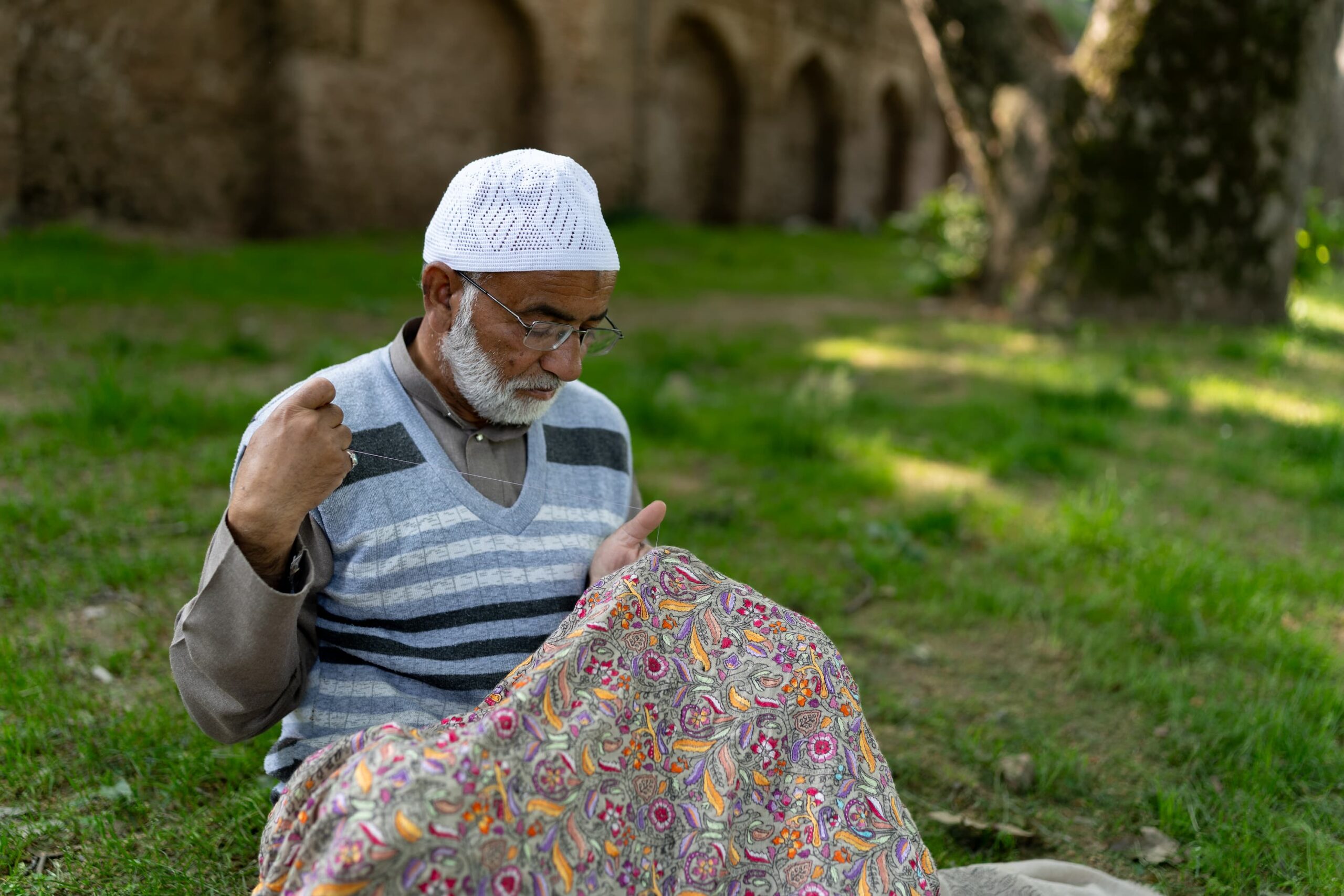
- Kani and Sozni work: Kani shawls are woven with small wooden bobbins, one thread at a time, and can take months. Sozni embroidery is stitched with a fine needle, often over many weeks.
- Walnut wood carving, papier-mâché, and carpets: Each is made using skills passed down through families.
Many of these crafts hold Geographical Indication (GI) status, which legally ties the product name to its place of origin. A handloom product made in Kashmir carries generations of knowledge that machines cannot replicate.
How Do Mass-Produced Imitations Differ?
Imitations copy patterns and colours but not the process. Many “pashmina” scarves sold cheaply are viscose, acrylic, or blended yarn. Printed paisley replaces woven or embroidered paisley, and machine stitching replaces hand embroidery. They may look similar in photos, but they pill, fade, and lose shape quickly. They also lack the uneven, subtle finish of true handwork.
Why Does Authenticity Matter?
1. It supports artisan livelihoods. Kashmir’s craft sector sustains thousands of families. When imitations undercut prices, artisans cannot earn fairly, and young people leave the craft.
2. It preserves cultural heritage. Srinagar is recognised by UNESCO as a Creative City for Crafts and Folk Art, which underlines how important these traditions are. Every authentic purchase keeps those skills in use.
3. It gives you real value. A genuine piece lasts for decades. A cheap copy is replaced within a season, so it costs more in the long run.
4. It is more sustainable. Natural fibres and slow production have a lower environmental footprint than synthetic fast-fashion copies.
5. It protects against fraud. Misleading labels erode trust in the whole Kashmiri brand.
Read more on UNESCO’s recognition of Srinagar here: UNESCO Creative Cities Network – Srinagar.
How Can You Identify Genuine Kashmiri Handicrafts?
- Check for a GI label or certification and a traceable seller.
- Examine the weave. Handwork shows tiny natural irregularities. Perfect uniformity suggests a machine.
- Feel the material. Real pashmina is soft, warm, and slightly textured, never slippery or shiny.
- Ask about the process. Reputable sellers can explain who made it, where, and how long it took.
- Be wary of very low prices. Months of labour cannot be sold for a few hundred rupees.
- Buy from trusted Kashmiri brands with transparent sourcing and return policies.
Frequently Asked Questions
Is machine-made pashmina real pashmina? Sometimes the fibre is real but the weave is machine-made. These pieces are cheaper but lack the quality of a handspun, handwoven shawl. Many cheap “pashmina” items contain no pashmina at all.
What is a GI tag in Kashmiri crafts? A GI tag certifies that a product comes from a specific region and meets traditional production standards, helping buyers verify authenticity.
Why are authentic Kashmiri handicrafts expensive? The price reflects raw material quality, skilled labour, and production time, which can run from weeks to months for complex pieces.
How can I tell if a Kashmiri shawl is genuine online? Look for origin details, certification, clear product photos, artisan information, and fair pricing.
Conclusion
Choosing authentic Kashmiri handicrafts over mass-produced imitations is a choice for quality, heritage, and fair livelihoods. Look for origin, certification, and craftsmanship, and buy from sellers who can tell the story behind each piece.





1 Comment