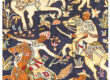
A Kashmiri rug works in a modern interior when it is treated as the room’s focal point. Pick a colour from the rug to repeat in cushions or art,keep the surrounding furniture simple, and place silk pieces where foot traffic is gentle. Hand knotted rugs from Kashmir bring texture, history and fine detail that mass-produced floor coverings cannot match.
Why Kashmiri rugs suit modern homes
Modern interiors lean on clean lines, neutral walls and plain upholstery. That calm backdrop is where a Kashmiri rug does its best work. A single piece with a floral medallion or a flowing vine pattern adds depth to an otherwise minimal room, without any extra clutter.
Kashmir’s carpet tradition goes back several centuries. It is commonly traced to the 15th century, when Sultan Zain-ul-Abidin is said to have brought skilled weavers from Persia and Central Asia to the Valley. Local weavers absorbed those influences and developed their own style, with soft colour palettes, naturalistic flowers, the chinar leaf and the tree of life.
These rugs are also made in a distinctive way. Many workshops still use the talim, a coded pattern script. A master reads it aloud, knot by knot and colour by colour, while the weavers follow along at the loom. The result is a handmade carpet that carries a particular place and its craft with it.
Understanding hand knotted rugs
Hand knotted rugs are made one knot at a time on a loom, with no machine tufting or gluing. Each knot is tied around the warp threads and trimmed, and thousands of these knots form the design.
Three things are worth knowing when you shop:
- Knot density: More knots per square inch generally means finer detail and sharper curves in the pattern. Finer Kashmiri pieces can run to several hundred knots per square inch.
- Material: Kashmiri rugs are made in wool, wool-silk blends and pure silk.
- Durability: A well-made hand knotted rug can last for generations when cared for properly. That is the reason many families treat them as heirlooms.
Hand knotted rugs from Kashmir may also carry a Geographical Indication (GI) registration, which helps buyers confirm regional authenticity. Ask the seller for documentation if provenance matters to you.
What makes silk on silk rugs special
Silk on silk rugs use silk for the warp, the weft and the pile. Because every layer is silk, the weave can be extremely fine and the finish unusually smooth.
Their most noticeable quality is the sheen.Silk reflects light, so the colours appear to shift as you walk around the room or as daylight changes. A rug that looks deep burgundy from one doorway can look almost rose-gold from another. This is a natural property of the fibre and a good sign of real silk.
Because silk is delicate, these pieces suit lower-traffic spaces: bedrooms, reading corners, formal sitting rooms, or as wall art. Wool and wool-silk blends are better for entryways and family living areas.
Room-by-room styling ideas
Living room
Anchor the seating area with your rug. A common guideline is that at least the front legs of the sofa and chairs should sit on it. Against a grey or off-white sofa, a Kashmiri rug in rust, indigo or sage becomes the room’s main colour moment. Keep the cushions simple and repeat one shade from the rug.
Bedroom
Place a silk on silk rug beside the bed or at its foot, so your first steps in the morning land on something soft. Soft rose, ivory and powder blue tones sit well with linen bedding and pale wood.
Dining area
Choose a hand knotted wool rug here rather than silk, since chairs drag and spills happen. Make sure the rug extends beyond the table edge so chairs stay on it when pulled out.
Hallways and reading nooks
A runner or a small accent piece brings warmth to a narrow or forgotten space. Many people also hang fine silk carpets on a wall, where the pattern can be appreciated like a painting.
Colour and pattern: keeping it modern
- Let the rug lead. If the rug has an intricate pattern, keep walls and large furniture neutral.
- Repeat, don’t match. Pull one accent colour from the rug into a vase, throw or artwork. An exact match looks forced.
- Mix old and new. A traditional medallion looks striking beside a sleek sofa or a plain stone table.
- Layer with care. Placing a Kashmiri rug over a large flat-weave jute base can work in big rooms, but avoid layering silk, which should lie flat on a clean floor.
- Consider scale. In small rooms, a smaller rug with open space around it often feels more refined than one that nearly touches every wall.
Caring for your Kashmiri rug
Good carpet rugs reward regular, gentle care:
- Vacuum lightly with suction only, without a beater bar, and always in the direction of the pile.
- Rotate the rug every six to twelve months so wear and sunlight are distributed evenly.
- Limit direct sun. Prolonged exposure can fade natural dyes over time.
- Blot spills immediately with a clean cloth. Don’t rub, and avoid soaking silk.
- Use a breathable rug pad to stop slipping and protect the fibres.
- Clean professionally every few years, using specialists experienced with hand knotted and silk rugs.
How to check authenticity before buying
Turn the rug over. On a hand knotted piece, the pattern looks nearly as crisp on the back as on the front, and you can see the individual knots. Machine-made rugs tend to show a uniform, grid-like back with a backing layer. Ask the seller about the material, knot count, origin and weaving time. Reputable Kashmiri sellers will answer clearly.
Frequently asked questions
What is a hand knotted Kashmiri rug?
It is a rug woven on a loom in Kashmir, with each knot tied by hand around the warp threads. The pattern is built knot by knot, often guided by a talim pattern script.
What does “silk on silk” mean?
It means the warp, weft and pile are all silk. This allows very fine detail and a distinct, light-reflecting sheen.
Are silk rugs suitable for everyday use?
They are best in low-traffic areas such as bedrooms or sitting rooms. For hallways and dining areas, hand knotted wool rugs hold up better.
Do Kashmiri rugs suit minimalist interiors?
Yes. A single patterned rug in a simple room acts as the focal point, adding warmth and texture without extra decoration.
How long do hand knotted rugs last?
With proper care they can last for several decades, and many are passed down through generations.
Final thoughts
A Kashmiri rug is more than a floor covering. It carries the skill of weavers, a regional design heritage and a lot of time in every square foot. Whether you choose a fine silk on silk piece for a quiet bedroom or a sturdy hand knotted rug for a busy living area, let it lead the room and keep everything around it calm. A modern home then gains something it often lacks: a sense of depth and story.