


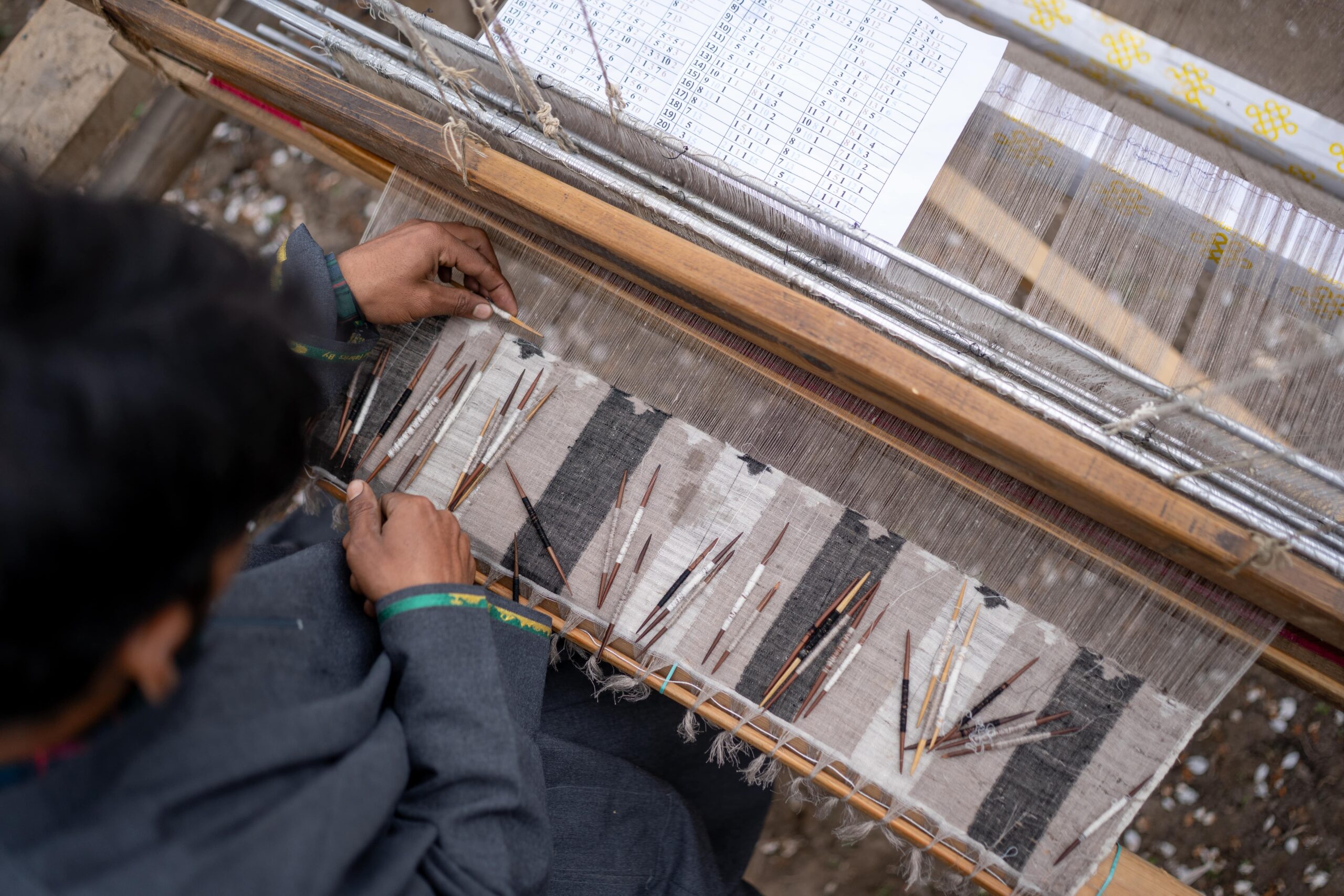
Long before the sun clears the poplar trees lining the Jhelum, a Kashmiri artisan household is already awake. In the old quarters of Srinagar and in villages like Kanihama and Zadibal, entire families still build their days around a single loom, a wooden frame, or a fine needle the same tools their grandparents used. This is what a day in the life of a Kashmiri artisan family actually looks like, told through the people who keep this centuries-old craft alive.
Dawn: Tea, Prayer, and the First Thread
The day begins quietly, usually before 6 a.m. Noon chai the salted pink tea Kashmiris drink with fresh bakery bread is poured while the household settles into its roles. The eldest weaver, often a man in his fifties or sixties, walks to the small workshop attached to the home, where a wooden Pashmina loom has stood in the same corner for decades. Before touching the yarn, he checks the warp threads for tension, a habit passed down rather than taught in any formal sense.
Meanwhile, the women of the house often begin the delicate work of hand spinning raw Pashmina wool, or start their day’s quota of Sozni needlework the fine, almost invisible embroidery Kashmir is famous for. A single Sozni shawl can take anywhere from a few weeks to over a year, depending on the intricacy of the pattern, and it is common for two or three family members to work on different sections of the same piece.
Midday: The Rhythm of the Workshop
By late morning, the household has fully shifted into production mode. In a papier-mâché family, this might mean one member moulding pulp over clay forms while another, often a younger sibling still learning the craft, applies the first layer of naqashi (hand-painting) under close supervision. Wood carving families follow a similar apprenticeship model young hands start with simple walnut wood coasters before they’re trusted with an intricate Khatamband ceiling panel or a carved jewellery box.
This is also when buyers, exporters, or local craft cooperative representatives sometimes visit, discussing orders, GI-tag documentation, or export shipments. Many artisan families now sell directly to customers abroad, a shift that has changed household economics considerably over the last decade though the actual craftsmanship at the workbench hasn’t changed at all.
Lunch is simple and shared, often eaten cross-legged on the workshop floor rather than at a separate table, because stepping away from an unfinished shawl or an unfired papier-mâché piece for too long can disrupt the day’s momentum.
Afternoon: Precision Over Speed
Kashmiri craftsmanship runs on patience, not deadlines. A weaver working on a Kani shawl woven entirely by hand using small wooden bobbins instead of a shuttle might complete only an inch or two of fabric in a full day. Families explain this not as slowness but as respect for the material rushing a Pashmina weave or a Sozni motif damages both the product and, eventually, the family’s reputation.
Children in artisan households often return from school in the afternoon and sit nearby, watching before they’re old enough to hold a needle or chisel themselves. This informal, in-home apprenticeship is how most Kashmiri crafts have survived for generations, largely outside formal training institutes.
Evening: Finishing Touches and Family Time
As daylight fades, the pace softens rather than stops. Evenings are often reserved for finer, close work tasks finishing embroidery details, polishing a wood carved surface, or reviewing the day’s woven inches by lamplight. Conversations blend craft talk with ordinary family matters: school fees, a wedding in the neighbourhood, or the price of raw Pashmina that season.
Dinner is usually the one meal the whole family shares without interruption, and it’s often when younger members ask questions about a pattern’s origin or a motif’s meaning chinar leaves, paisleys, almond shapes keeping the craft’s history alive alongside its technique.
Why This Way of Life Matters
Behind every handmade Kashmiri shawl, papier-mâché bowl, or carved walnut wood piece is not a factory process but a household rhythm built over generations. Understanding this daily life is part of understanding why authentic Kashmiri crafts carry the value they do each piece is genuinely the product of hours, skill, and family continuity, not mass production.
Explore authentic handmade Kashmiri
FAQ
How long does it take to make a Pashmina shawl?
A plain hand-woven Pashmina shawl can take one to two weeks, while an intricately embroidered Sozni or hand-woven Kani piece can take several months to over a year.
Do children in Kashmiri artisan families formally learn the craft?
Most learn informally, watching and assisting family members at home from a young age before gradually taking on their own work.
What makes Kashmiri handicrafts authentic?
Genuine hand-spinning, hand-weaving, and hand-embroidery verifiable in many cases through GI (Geographical Indication) tags for products like Pashmina, Sozni, and Kani shawls.
Is Kashmiri craftsmanship recognized internationally?
Yes, Srinagar was designated a UNESCO Creative City for Crafts and Folk Art in 2021, recognising traditions including Pashmina, papier-mâché, and woodwork.