


Kashmir’s artisan traditions are diverse and deeply specialized. Each craft requires years of practice, a sensitive touch, and intimate knowledge of materials that cannot be taught—only passed on.
Heritage in Every Thread. Story in Every Stitch.
The Soul of a Region
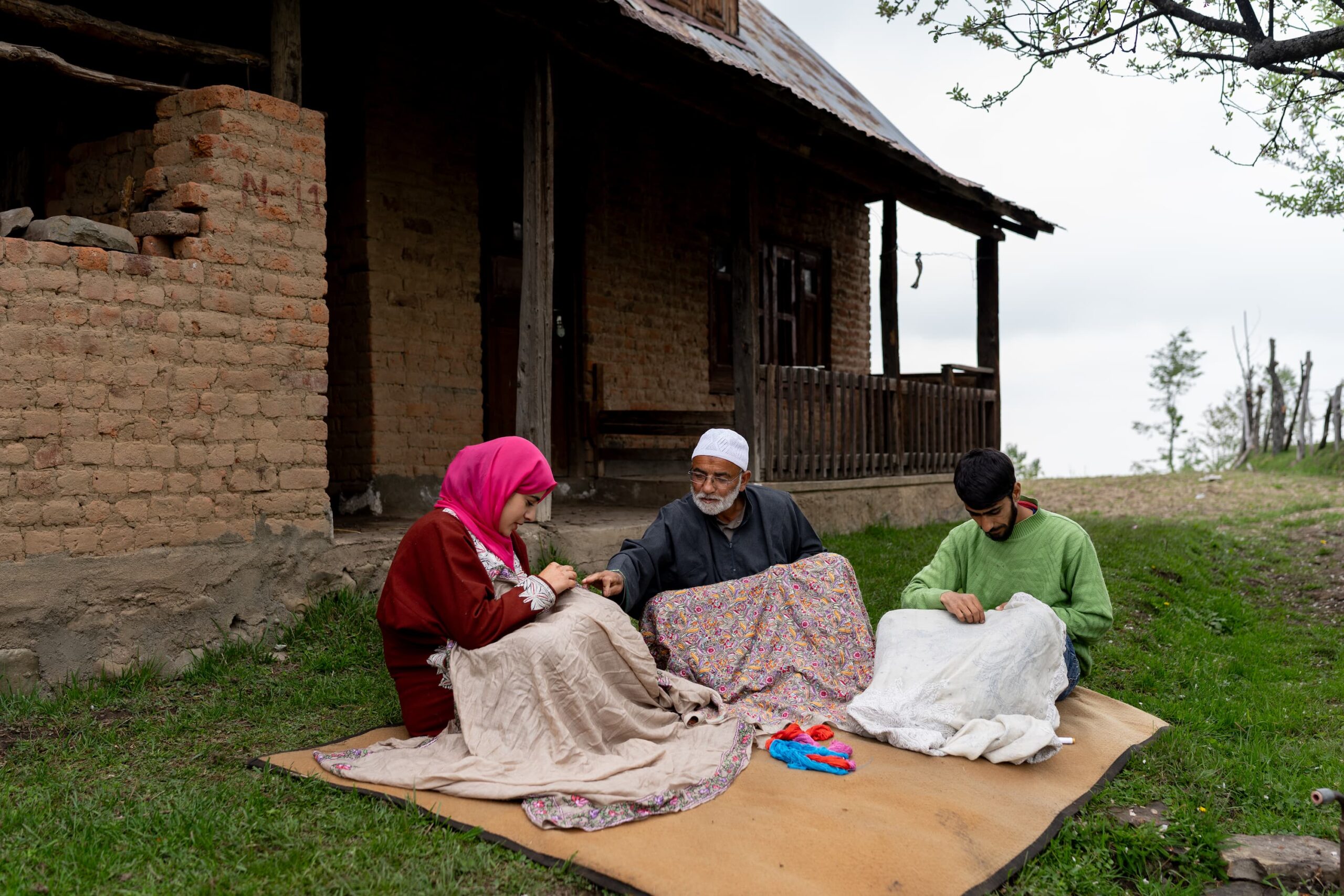
More Than Craft—A Way of Life
The Iconic Crafts of Kashmir
Crafted by Hand. Honed by History.
Pashmina Weaving
Pashmina Weaving
High in the Himalayan plateaus, where the air is thin and winters are unforgiving, roams the Changthangi goat—a rare breed whose undercoat yields the world’s finest wool. Known as soft gold, true pashmina is gathered in spring, when the goats naturally shed their fleece.
But the journey from mountain to masterpiece is slow and sacred.
The wool is first hand-carded and spun on a traditional yinder (spindle), often by women in artisan households. This delicate fiber cannot be handled by machines without breaking—so the entire process remains untouched by automation.
Once spun, the yarn is carefully woven on wooden looms, a task requiring immense patience, practiced rhythm, and deep focus. The artisans work in silence, letting their hands tell a story line by line, warp by weft.
Each shawl can take weeks—sometimes months—to complete, depending on its complexity. And no two are exactly the same.
A true pashmina is not just worn. It is kept, gifted, cherished—an heirloom passed from generation to generation.
Sozni & Kani
Sozni & Kani
Two of Kashmir’s most treasured crafts, Sozni embroidery and Kani weaving, speak the language of patience, precision, and timeless beauty.
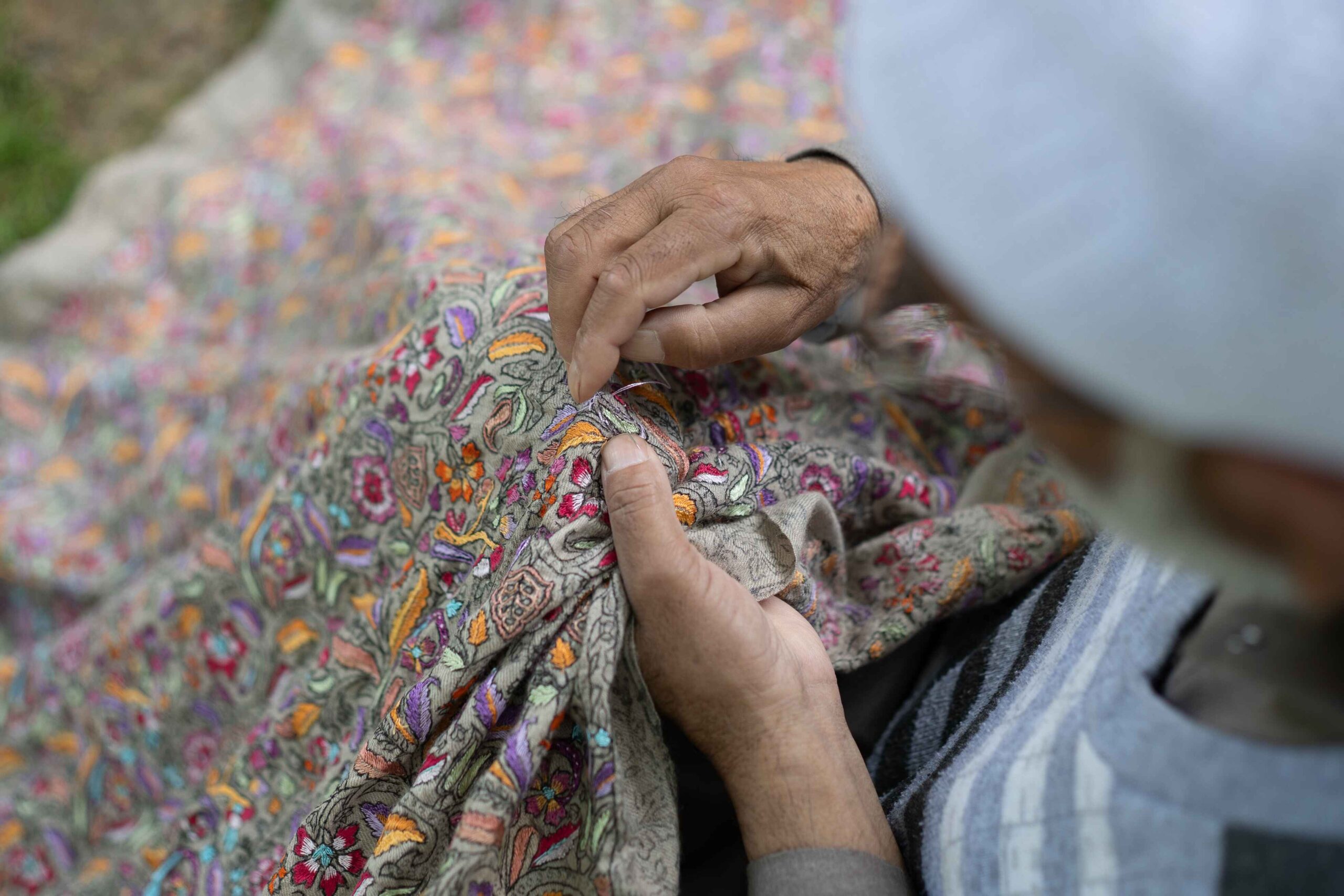
Sozni is hand-embroidered with the finest silk threads, often on handwoven pashmina. The technique is subtle yet incredibly detailed—each motif mirrored on both sides, a signature of the master embroiderer.
Patterns are drawn from the valley’s natural poetry—willow branches, chinar leaves, blossoms, and paisleys—stitched slowly, deliberately, over weeks or even months. To watch Sozni being created is to witness focus become art.
Kani weaving, by contrast, is a form of loom magic. Instead of a shuttle, artisans use dozens of small wooden spools, called kanis, each carrying a different color. Working from a coded design map known as a Talim, the weaver constructs intricate designs into the fabric itself—not as surface embroidery, but as part of the weave. The result is a richly textured, vibrantly patterned shawl that can take six months to a year to complete. No two are ever the same.
To own a Sozni or Kani piece is to hold a fragment of that legacy—woven not just with wool, but with memory.
Revival, Not Reproduction
Keeping the Flame Alive
At The Artisans, we don’t replicate heritage—we revive it. We work directly with master craftsmen and craftswomen to ensure their knowledge is respected, fairly rewarded, and kept alive.
By choosing handmade over mass-produced, you’re not just wearing something beautiful. You’re keeping history alive, one thread at a time.
Every thread has a past. Every piece tells a story. Wear yours.